11 Oct 2019 8:12 pm
The basics
The first important component for my EP was to understand how modular synths worked which would benefit any synth I work on understanding the pathways. To do this I got hands on using an Oakley and Buchla modular synth to complete 4 tasks all to understand different patch layouts to create unique instruments. For this week I set myself to create my own two modular synth patches for the weekly assignment modular synth task. The first task was to create a Patch with the Oakley modular synth with two separate tunings. The set up I did was connecting a MIDI keyboard to the midi in of the Oakley, sending the pitch split through to both VCOs (voltage controlled oscillators) and the gate output of the MIDI in gate output to the gate output of the ADSR (which is connected to the voltage controlled amplifier out to the MIDI interface). one VCO was outputting a saw wave and the other VCO was outputting a Triangle wave into separate inputs of a multi mix which out put was connected to the ADSR VCA in. To complete the task I changed both tunings of both oscillators, tuning one to a C and the other to a E. I did this with sine waves to make sure the tuner I was using would not register different tunings, the VCO tuned to a C a Saw wave and the VCO tuned to an E a Triangle wave. As well as altering a quick attack time and a quick decay time on the ADSR. This synth was to be used as a lead in a drum and bass composition as I found the sound to fit most in that style which in postproduction I added reverb to create a much more fuller sound.
To complete Task two I used the same set up as the 1st task but switched the saw wave VCO to a Sine wave and kept the triangle wave VCO the same. instead of connecting them straight to the multi-mix I connected them to a splitter and sent the both to different ADSRs which would then get routed to the multi-mix. However, I set the sine to have a long sustain and the triangle to have a short sustain giving a pulse creating a different texture to the sound created from the oscillators. I used this synth as a lead in a EDM composition due to the pulse like sound matching the genre style.
23 Oct 2019 5:27 pm
For this week I created two synthesiser patches for the final two weekly assignment modular synth tasks. The 3rd task was to create a Flute with the Oakley. I used the the same set up patch as the 2nd tasks. However, I had tuned both VCOs to be the same. however, one VCO was a sine wave and the other VCO was a Triangle wave. The difference with this patch was I added white noise to a separate ADSR to have a longer release time to give a breathing effect and having the oscillator. Additionally I created a Kick drum using the Buchla, by having one VCO as a complex wave, I controlled the frequency modulation to it lowest point which gave a low toned thud sound which I recorded and bounced down as an audio track. I used both instruments on one track, being a orchestral composition where both instruments would fit, having the flute acting as the melody line. in post editing I EQ’d the kick boosting the bass, and adding reverb to the Flute to give a more realism to the artificial sound.
For the last task I created a Drone with the Buchla. I used two VCOs outputting straight out to a audio interface through a mixer so there was no requirement of any MIDI controllers so it was just outputting clear frequencies, both VCOs were complex waves, one was set as a low tone to give the foundation of the drone. The second oscillator was set to a fluctuation random voltage input through the frequency modulation set low, to give irregular low thumping sounds ranging quickly to slow. The composition was based on panic attacks, the thumbing representing what the heart is doing.
The Philosophies
9 Nov 2019 5:06 pm
The East coast and west coast philosophies are two different Modular synth designs with very opposing styles, one being designed to follow traditional music structures through the use of keyboards from the East coast of America, and the other being for more experimental and generative style of music from the West Coast. The East coast philosophy founded by Robert Moog in New York (east) designed to be used on keyboard following traditional music by the ‘use of richer harmonic wave forms such as square and saw waves giving a strong consistent notes which go through an ADSR'(Rivas, T. J. 2018, November 10) to determine at what point the note hits its peak when the key is pressed, as well as how long that note is then held for and for how long it plays after the key has been let go of. This was designed for more structure based compositions which would be used for commercial use rather than west coast which philosophy. The west coast philosophy created by Donald Buchla in California (West) is based on experimental based music. It is not intended for the use of keyboards but rather a signal flow using wave forms using wave shapers which gets manipulated gradually throughout the composition, it does not use any form of harmony as it is more generative.
References
Rivas, T. J. (2018, November 10). The Basics of East Coast and West Coast Synthesis. Retrieved from https://reverb.com/uk/news/the-basics-of-east-coast-and-west-coast-synthesis?locale=en-GB
East Coast Composition
22 Nov 2019 7:06 pm
My East coast compositions is a Tech-house composition mixing multiple genres using Serum a digital modular synth which I used on the DAW Logic Pro X . The first genre and instrument introducing the composition is a future house pad inspired instrument which I found the genre doesn’t use any intense texture for instrumentation, so I decided to output Sine waves on the two oscillators which I was able to add unison which layers both oscillators to build a fuller texture. I then passed them through an ADSR to have a long attack time so the note doesn’t sound sudden, as well as having a long Decay and release, for a longer note stretch. I linked both oscillators through a Low Frequency Oscillation which I used to manipulate the volume level to create a rhythmic pulse every quarter bar. I was able to add one more oscillator being a Sub wave form of a sine wave down by one octave. The effects I linked were delay with a pingpong effect adding more texture, compression to take away any peaks in audio, a chorus to thicken the timbre and a reverb to make the sound more spacey, as well as an EQ to take away the low end, to make it more of a pad and less of a future house styled bass.
This shows the envelope with a longer attack giving a gradual duration to when the sound hits its peak when the note is triggered to give more of a pad feel
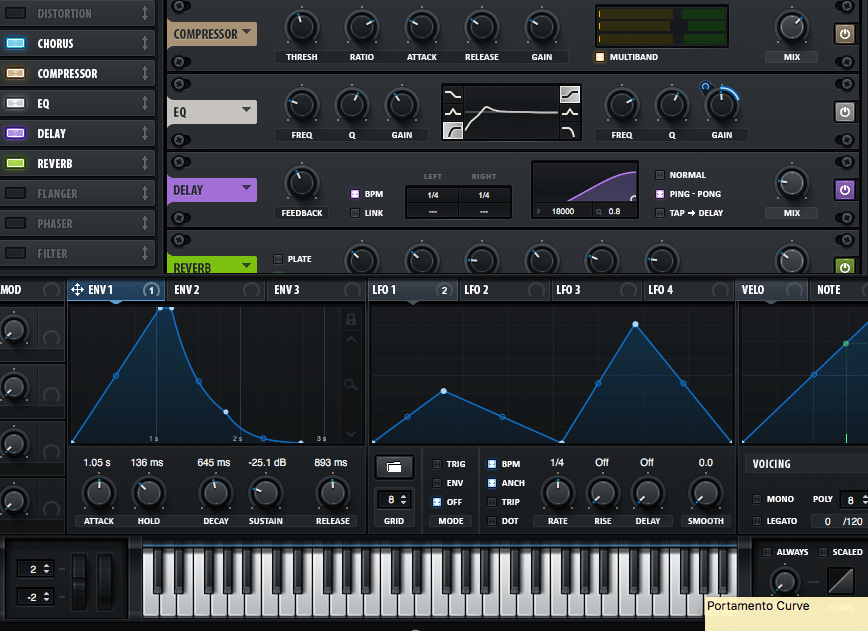
Having using digital modular synths they allow a more precise control of manipulation to the wave files allowing the user to be able to visually see what is being effected.
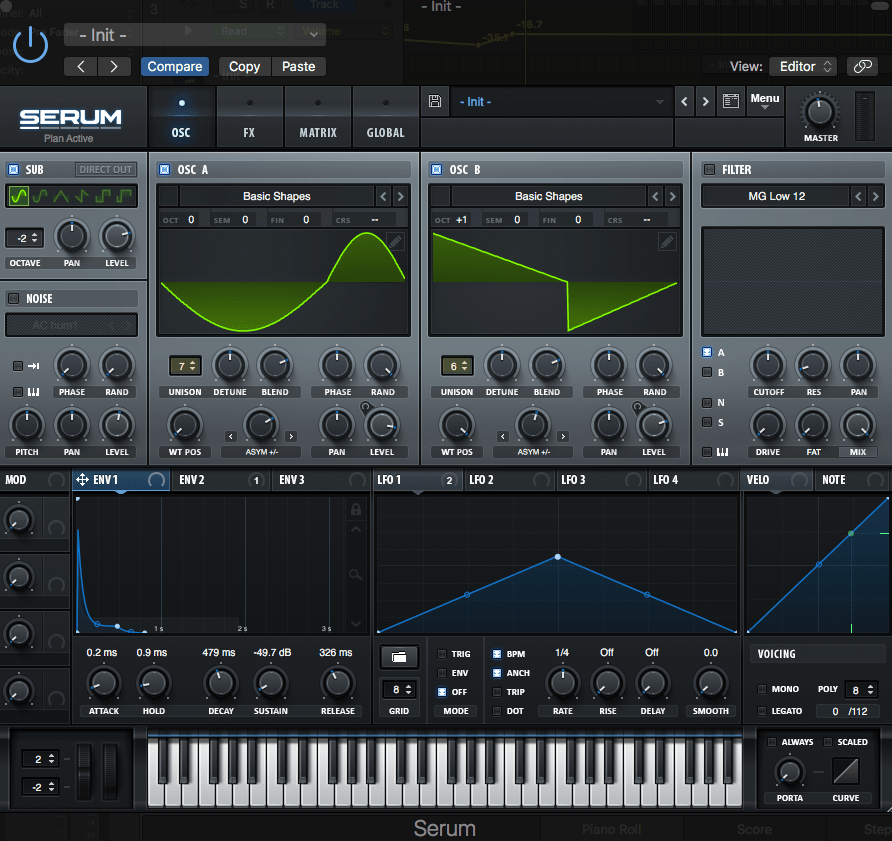
For the second instrument I created a techno inspired plucking instrument two separate oscillators one beings a triangle wave and the other being a sine wave layered with multiple unison, using a wave shaper I was able to manipulate the shape of both waves a very minuscule amount which alters the sound in a big way giving a richer tone to the sine wave. I then passed them through an ADSR having a quick attack with short sustain giving it that pluck sound. A third oscillator was added to create fuller sound. For effects I then routed the oscillators through a chorus effect to thicken the sound as well as a ping ping delay creating more background rhythm.
This shows the envelope have a shortened attack to give a more plucky sound
The third instrument was added as a arpeggiated bell to give more life to the composition. This was done with two oscillators both being sine waves having their wave forms altered slightly to sound slightly grittier than a traditional sine wave. They both then go through an ADSR with a quick attack and sustain to give a pulse sound. For the effects I used a pingpong delay for the arpeggio giving a more rhythmic pattern as well as reverb for a more space like sound matching to the techno aspect.
For the drum I used a similar technique to what I found with the Buchla However, I decided to use a sine wave with a quick attack and sustain which gave an identical effect I only used a kick drum for this composition due to the transfer of future house style pads to a techno styled pluck.
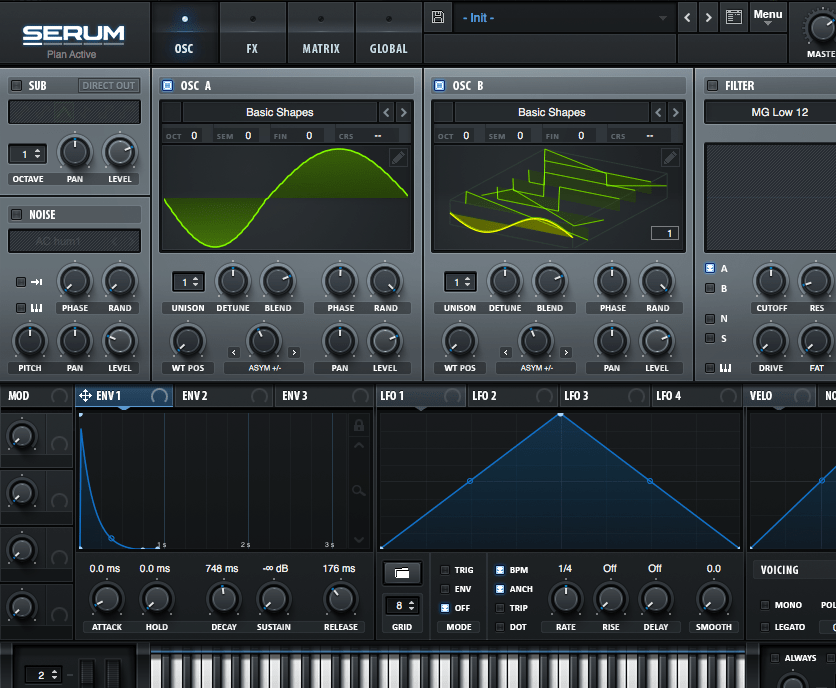
For the 5th instrument, I wanted to use a simple sound stripped back so when the chorus begins it begins much stronger. To do this I used a oscillator being a sound sine wave, this went through an ADSR with a quick attack and sustain to give a that pulse sound. This instrument would be used to lead into the chorus playing the baseline.
The 6th instrument is the baseline for this I wanted to create a Deep house drop being accompanied by a techno styled instrument, mixing both genres becoming a more modern tech/ house styles chorus. This used 3 oscillators all being sine waves, one being a sub down by two octaves while one lowered by one octave with a layer of 4 unison as well as the final oscillator being down by two octaves with a layer of 8 unison. the three oscillators go through an ADSR which has a quick attack and long decay and release holding the note length. This ADSR is then sent through a filter altering the cut off acting as a gate each time the key is pressed. The effects I used for this instrument was a chorus and compressor to build the sound without distorting and adding reverb to give the modern deep house sound.
26 Nov 2019 3:32 am
The 7th instrument is the exact same as the techno instrument to, it is performed an octave higher to accompany the deep house baseline performing a different melody line.
The 8th instrument is the same as the 3rd instrument (arpeggiated bell) However, it is used this time as a techno inspired overlay giving a euphoric style accompaniment creating more of a techno effect to the chorus.
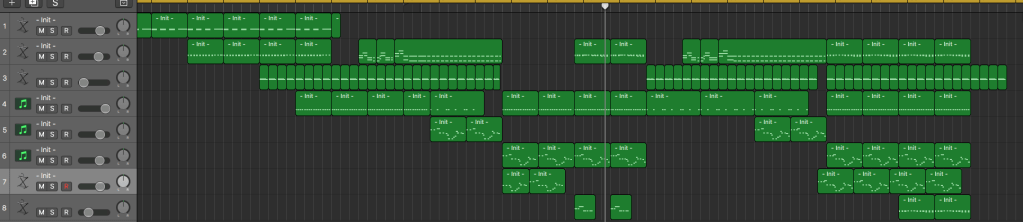
This screen shot is of the instruments. track numbers mentioned above
The composition
This composition was designed to feature house and techno separately in the intro and the verse and then bring both components together to create tech house in the chorus. The low tones and bass styled instruments were used as the house genre while the mid and high range instruments were inspired and performed in a techno. The Composition featured components of all the genres in one. the future house pad was performed by itself, the techno style was based drum with a mid toned instrument with a catchy off beat rhythm, Where as leading into the chorus the instruments slowly separate having one instrument play the chorus bass line leading into the chorus where a deeper more thicker bass adapting the genre of deep house. I then blend both styles together to create tech house. The bells are used to give a more eerie sound which is utilised for both genres. I used simple wave forms with simple filters and effects as inspiration for the east coast philosophy which could all be recreated on an analogue synth as well as a following a normal music structure of verse chorus.
23 Dec 2019 4:06 pm
The west coast Composition
For this composition I wanted to be as experimental as possible to which point I had no control or production where the music would be going. for this I used the program VCV rack, where I could create my own modular synth which would be generative rather than creating music using a DAW, this was to capture what the west coast philosophy is all about.
The module
This is my module which I created, however I spread it out to understand the connections as I was going along
This screenshot is all the connections at the end of the performance
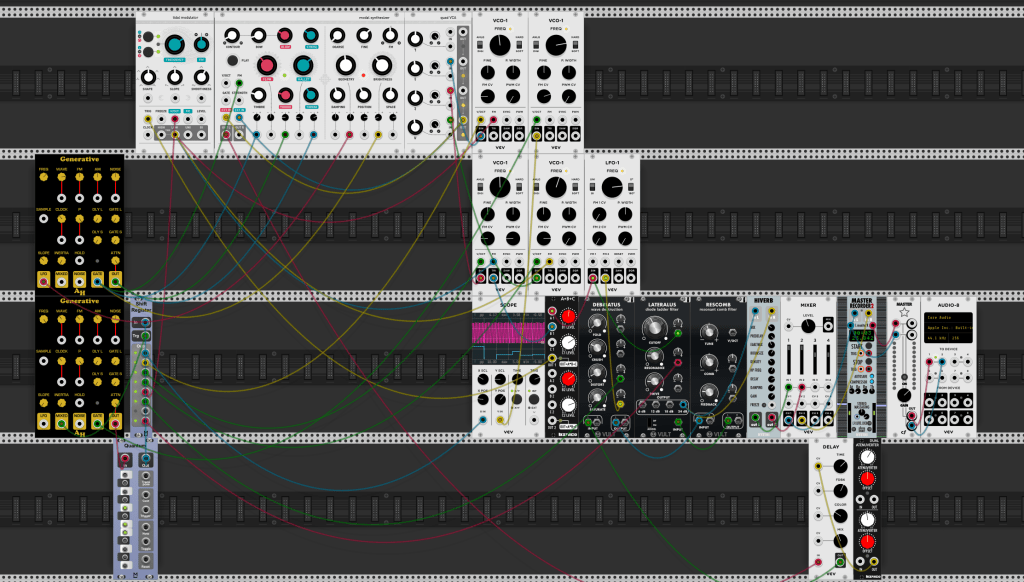
I wanted three oscillators to be the base of my drone all going through the same effects to give an eerie and resonant sound. To do this I firstly connected three oscillators to a quad VCA a way to get them all into one to be outputted by one connection into a synthesiser which would allow me to shape and modal and create unique sounds. two oscillators are connected to a separate multi mix which gets outputted to a modulator, where the two oscillators get manipulated separately. Both modal synthesiser and modulator are connected to a shift register which is connected to a generative module, this randomises which oscillator gets triggered, as well as a quantum which is connected to a separate generative module, this is selecting different notes as well effects, which will get randomly outputted, the oscillators are set to different frequencies this is to create a random pattern of frequencies getting outputted. the The synthesiser then outputted to a delay, where all the oscillators then run through, then through to a distortion module, through to a comb filter which delays audio into itself, which then outputs through to a filter where I could alter the resonance and frequency of the audio going in which allowed me to to create less harsh sounding effect giving the ghostly droning effect I wanted, which then outputs to a reverb effect, to create a fuller sound an takes away any long space between notes so there no long durations of silence, this then goes through to a mixer into the recording module which is how I recorded the composition, this recorder outputs to an additional mixer connected to a midi out device which i what I used to be able to output audio in through headphones where I could hear what is happening. As the composition was being recorded I made random connections, whether oscillator to effects, or placing parts of the synthesiser through the random generator LFO which would randomly alter the levels on the synthesiser such as the geometry giving more randomness to the sound itself. this was to build the composition live over time capturing the west coast philosophy.
Performing live
Apart from the connection stated above. I would make random connections throughout the composition creating subtle changes throughout. Such as connecting random waveforms straight through to a filter module to thicken the texture of the oscillator when it is triggered.

I found altering the synthesiser would effect all of the oscillators due to them all being connected through to the shift register, so I connected the generative module straight to the synthesiser to randomly change effects shaping each sound randomly throughout the composition as well as having it connected to the quantum and shift register to output notes at random.
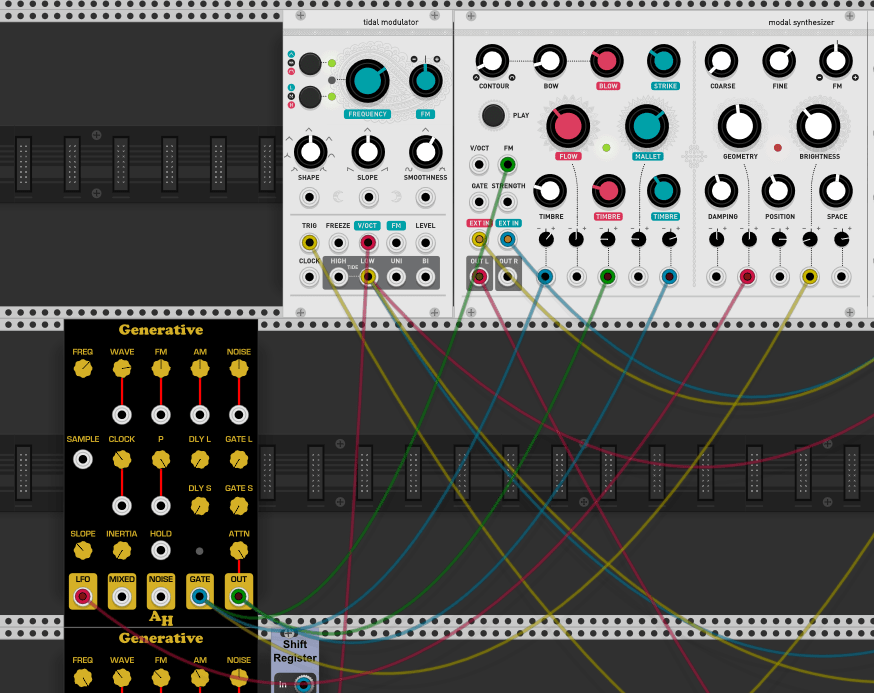
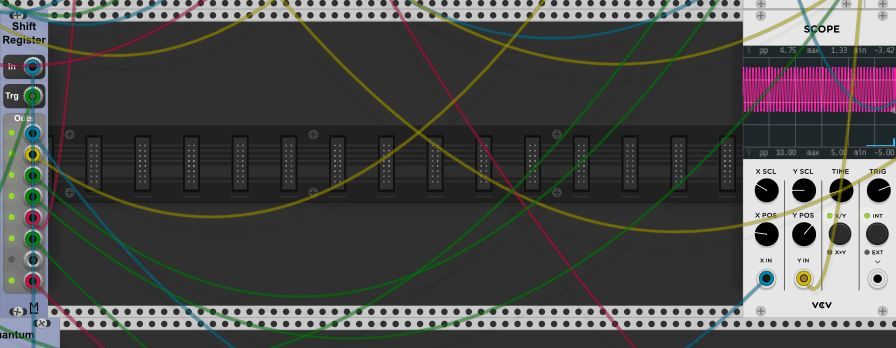
Additionally I connected a Scope module to a sine wave form to a the shift register module to see how the wave was visually being effected, throughout the composition.
The composition
This composition was based as a dark ambient themed composition based of the properties of the west coast philosophy. I wanted to create a sinister theme, which I obtained through random generated dissonant notes as well as frequencies being triggered at different times. being put through multiple filters to strip harshness from wave forms such as saw or triangle. The other component was to build the drone overtime creating more intensity and randomness through the generative modules speeding up what was attached to the LFO output of the Generative module.
24th Jan 2020 4:06 pm
The Contemporary Composition
This composition took components of the east coast regarding using more basic wave shapes designed for use of keyboard less experiential . However, the component of west coast I wanted to create was experimenting with serum to create a EDM riser which contained no notation for a drop into the chorus section. This song is intended to be a Electronic dance music big room style introduction and verse leading into a trance chorus. This was all composed using serum.
My first instrument is designed to be a saw wave synth with a long decay and sustain to make a more constant sound with a sudden stop as soon as the note isn’t played. I linked this to a filter this was to dull top end frequencies to make the saw sound less harsh being by played solo for a duration of time. The only effect I added was reverb to give more life to the instrument.
This photo is to represent the envelope style for creating a edm big room saw lead
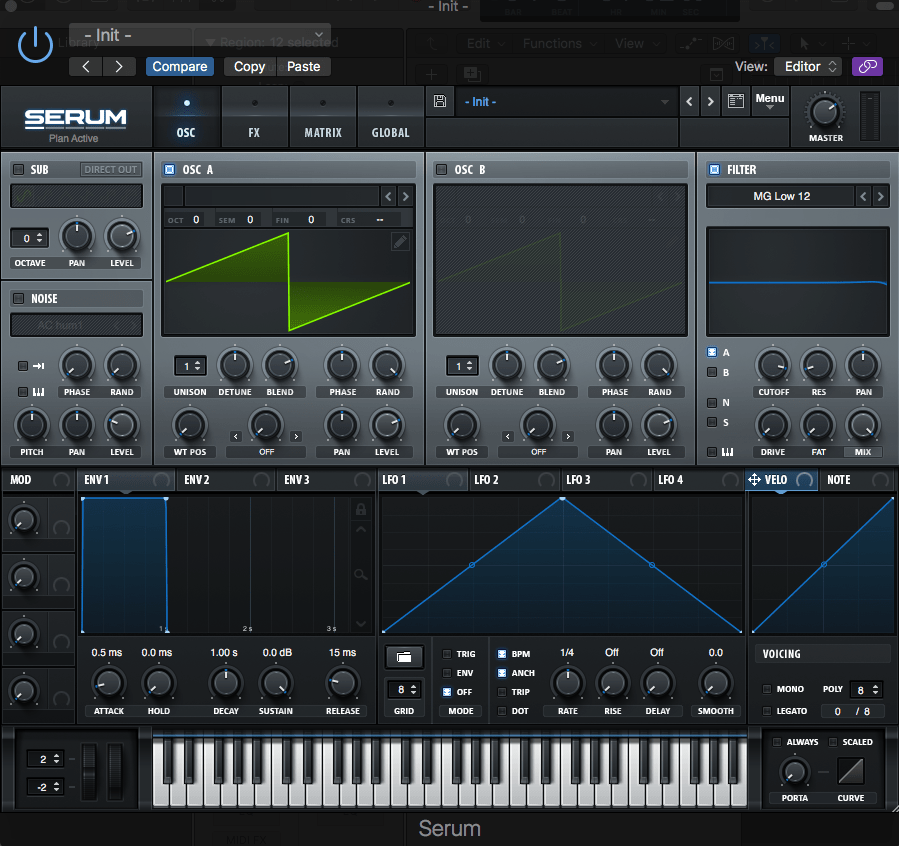
The second instrument is a Super saw, it uses two oscillators with saw wave forms with a full 16 layer unison on both. the envelope is the same as the 1st saw instrument. However, for this instrument I also link White noise which compliments the saw waves to give a thicker texture. For the effects I used reverb with the same levels as the 1st saw instrument. However, with the EQ I cut out all of the bass frequency to the bass instrument in this section is more distinctive.
This photo is to show the White noise module.
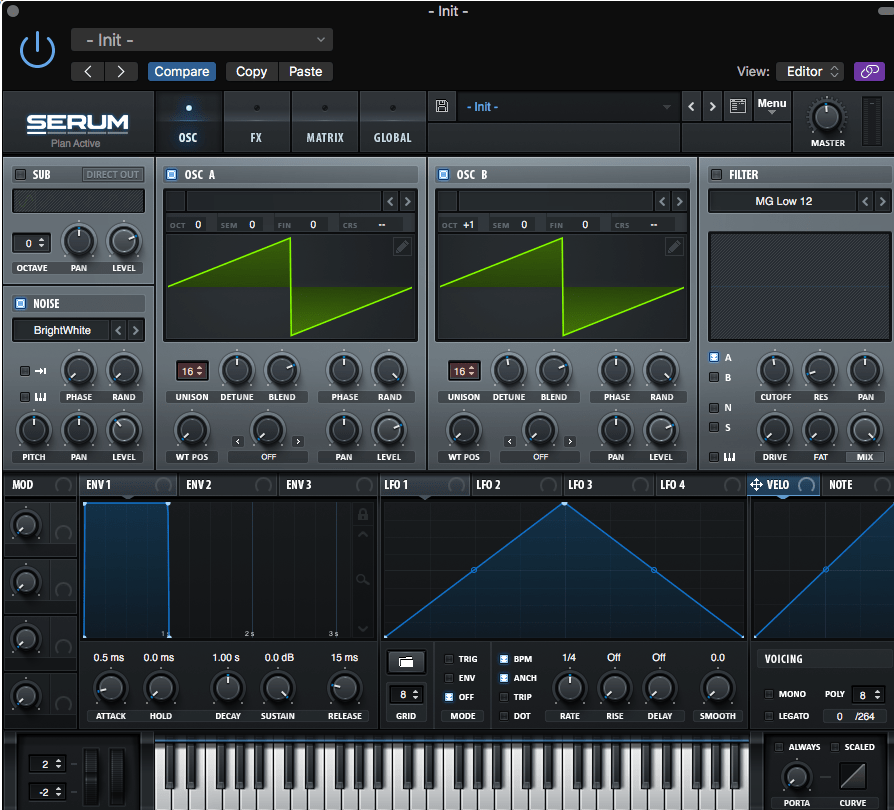
The third instrument is a duplication of the super saw to thicken the texture performing the exact same notation.
The 4th instrument is a sine bell to add additional depth and personality to this section of the composition, it is created from two oscillators both being sine wave forms with a short attack and sustain to give a plucking sound which is performed as a background addition to the section.
The 5th instrument is a Sub Sine Bass, this was created by two oscillators both sine wave forms, with a quick attack and long sustain as well as quick release when the note is released. The only effect attached is a reverb to add more texture, This is why the low end was cut from the super saws to make this bass stand out.
The 6th instrument is a snare, I created this by only using a sub sine wave oscillator as the impact of the snare getting hit an octave below, as well as adding white noise for the sound the snare makes post impact. I linked both volumes of these modules through an LFO which starts hight and only descends to a 0 value so they are all in sync when the note is triggered. The ADSR is set to have quick attack long sustain and 1 second release which I found to create the most realistic sound.
A photo of how the snare sound was made
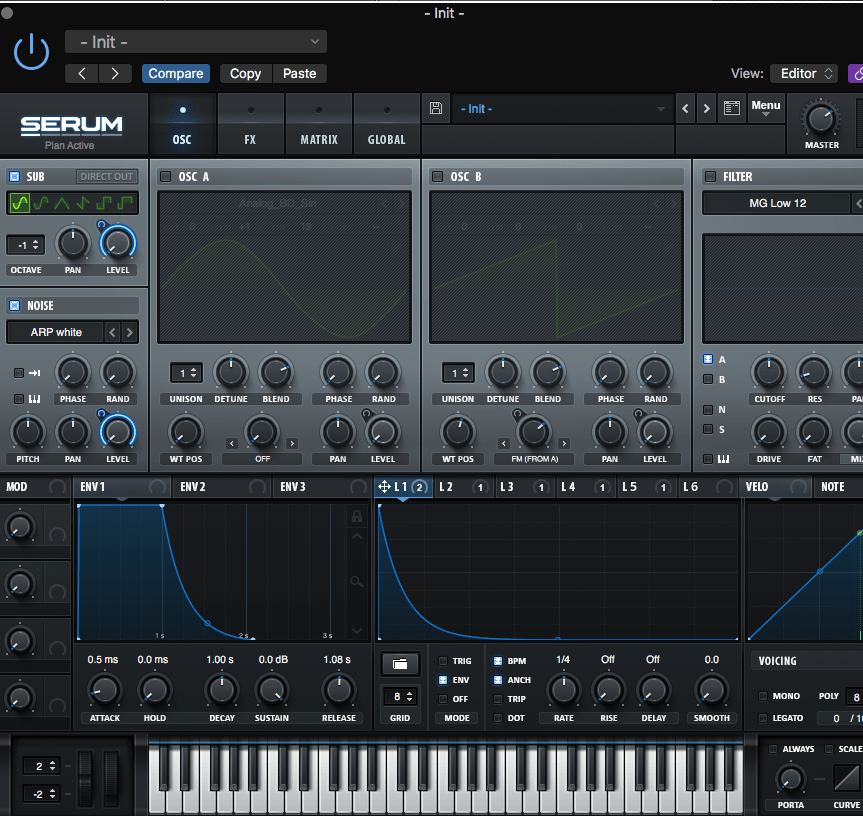
The 7th instrument was a Kick drum, This was created using one oscillator sine wave form, I linked it to an ADSR to have quick attack and sustain to give an impact sound. the kick and snare were involved in this composition to give a contemporary EDM club style composition with a simple 4/4 drum beat ever quarter bar.
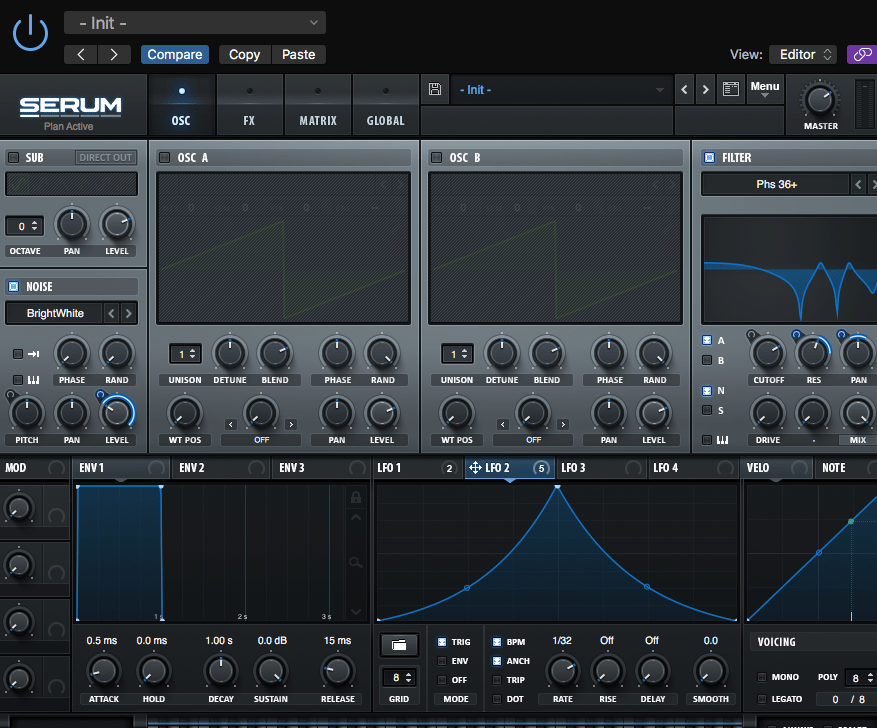
For the 8th instrument, this is the riser inspired by west coast where it has no notation one tone and gradually build more intense. This was done with no oscillators but only a white noise module an adsr envelope to give a quick and and sudden stop when the note is released. However, to create a rising sound I used an LFO with a slow 8Bar rate which gradually builds up and then decreases
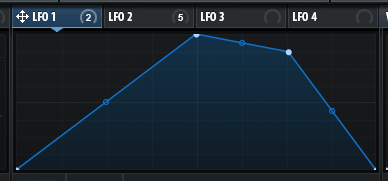
I found it sounded unique when I liked the LFO to the cut off of the filter. I wanted to build texture of the sound so I added an additional LFO at a fast 1/32 of a bar rate, attached to the resonant and pan of the same filter which is outputted to the noise module which gave a very unique distinctive sound rather than just a white noise rise.
The 9th instrument is a EDM drop lead this was done with three oscillators one sub sine wave, and the other two both being saw and triangle wave mix. both of the S&T waves were layered with 4 unison each. However with oscillator A I modified the wave form to bend manipulating the wave to give more of a curve this build texture changing timbre within the instrument. To build the sound I added white noise which combined I found made the sound thicker. I then sent all of this through an ADSR with Quick attack long sustain and quick release to give a consistent note when held that suddenly stops when the note stops. For the effects i implemented reverb as well as an EQ to dull the bass frequencies very slightly and build frequency in the mid range. I also made this instrument mono so it added more glide and character to the instrument. This instrument was to implement a big room style drop in a trance chorus mixing both together.

The 10th instrument is a duplicate of instrument number 9 however its played an octave higher, I did this due to both synths being set to mono I couldn’t use one instrument.
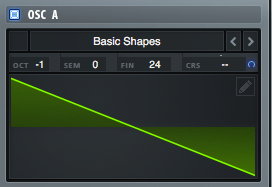
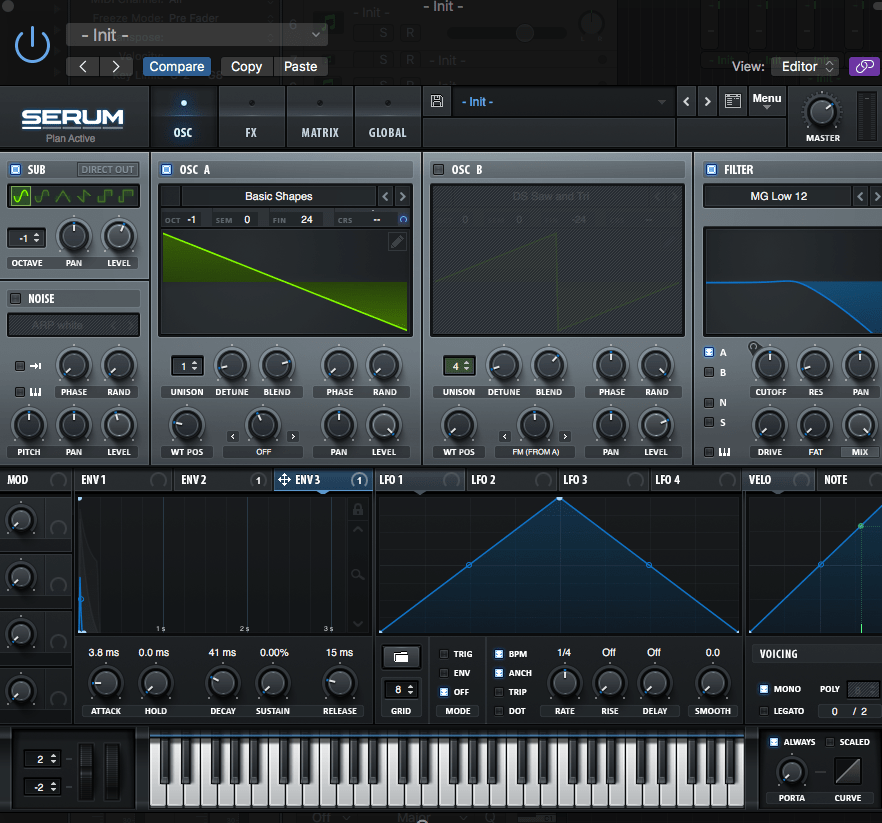
The 11th instrument is a Trance Bass has two oscillators one sine wave form a octave below and the other being a triangle wave. However, I attacched 3 envelopes. 1 ADSR for the instrument at a whole, with quick attack long decay and sustain with a long release.
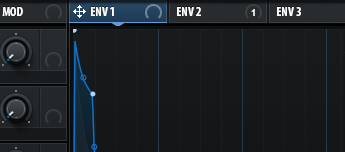
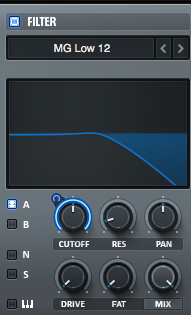
The second ADSR with a quick attack and sustain attached to the cutoff of a filter this gave a thudding sound each note that is triggered

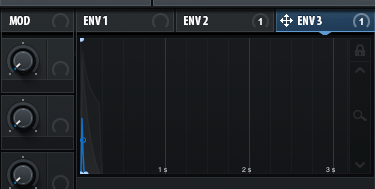
The third ADSR has a quick, attack, hold, decay, sustain and release which was attached Oscillator A’s Pitch. this gave a punchier sound when the note is triggered.
The effects I used were Distortion to give more grit to the bass, chorus to give a wider sound without phasing. Delay to add more bounce to the track as its going along, and compression to take away any peaking audio. This was all to create a trance bass which is based being more punchy with no held down notes giving short rapid notes.
The composition
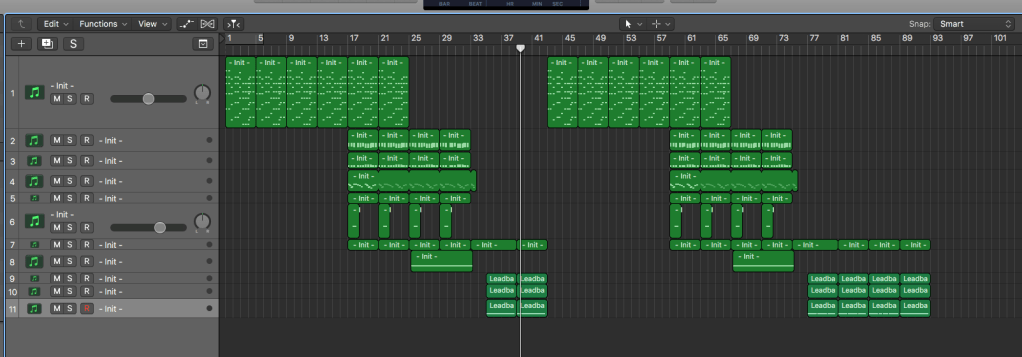
This composition matched exactly what I was trying to achieve in regards to a contemporary song style. The first three instruments all influenced by big house successfully build the introduction and verse, at which point the EDM riser builds leading to believe it will go into an EDM big room drop which suddenly the trance bass kicks in with a big room lead combining both genres which I found worked perfectly for what I was trying to achieve.
 UP870915 Music and Sound Synthesis Blog